Allen Stanford, a Texas billionaire,was accused of defrauding 13,000 clients of his company, Stanford Financial, this week. Clients thought that their money was invested in certificates of deposit, but evidence was found that suggests that Stanford's investment strategies boiled down to a Ponzi scheme.
FBI finds Allen Stanford in Virginia
James Vicini and Jason Szep, Reuters, 2/19/09
R. Allen Stanford's Private-Equity Connections
Deal Journal, 2/18/09
Showing posts with label finance. Show all posts
Showing posts with label finance. Show all posts
Thursday, February 19, 2009


Thursday, February 12, 2009
David Faber's "House of Cards" Special Report on CNBC: Slicing, Dicing, CDO's and the Economic Crisis
I plan to watch David Faber's "House of Cards", a CNBC Special Report, takes a close look at the slicing and dicing of mortgages. It premiers on Thursday, February 12th, at 8p. If you miss it, it is scheduled at the following times:
Update: David Faber discusses "House of Cards" with Charlie Rose
"In a special two-hour report, CNBC's David Faber takes an in-depth look at the causes of the ongoing collapse of the housing industry."
* Saturday, February 14, 2009 at 7p/10p ET
* Sunday, February 15, 2009 at 9p ET
* Monday, February 16, 2009 at 6a/8p/12a ET
* Saturday, March 1, 2009 at 12a ET
* Sunday, March 15, 2009 at 9p ET
Watch CNBC's House of Cards Thursday Night
"Faber follows the story from mortgage broker to homeowner, brokers to ratings agencies and all the way to former Federal Reserve Chairman Alan Greenspan. Most of what preceded the credit meltdown, which started in September 2007, happened under his watch, and in Faber’s interview, Greenspan admits that even he couldn’t explain collateralized debt obligations – and he had a couple of hundred Ph.D.s on staff." -Tom Brennan, CNBC
Update: David Faber discusses "House of Cards" with Charlie Rose
Friday, February 6, 2009
The late Pierre A. Rinfret's "blogs" on Wayback Machine
I came across the late economist Pierre Rinfret's website pages recently and found them to be informative and amusing. During the last several years of his life, Rinfret shared his experiences and views about economics and politics with the world, via the Internet, compelled by a desire to share his wisdom with the next generation.
Here are some links to a few posts that I found interesting:
12/8/05 PERSPECTIVE ON CHAOS
5/8/02 AMATEURS IN OFFICE OR WHY EVERY PRESIDENT HAS TROUBLE KNOWING WHAT IS GOING ON IN THE AMERICAN ECONOMY
"Wall Street Starts at a river and ends at a cemetery"
FEAR AND THE AMERICAN ECONOMY IN 2002
FINANCIAL SCANDALS AND BOARDS OF DIRECTORS
Here are some links to a few posts that I found interesting:
12/8/05 PERSPECTIVE ON CHAOS
5/8/02 AMATEURS IN OFFICE OR WHY EVERY PRESIDENT HAS TROUBLE KNOWING WHAT IS GOING ON IN THE AMERICAN ECONOMY
"Wall Street Starts at a river and ends at a cemetery"
FEAR AND THE AMERICAN ECONOMY IN 2002
FINANCIAL SCANDALS AND BOARDS OF DIRECTORS
Saturday, January 31, 2009
Back to Basics: The Future of Banking and Finance Discussed at the 2009 World Economic Forum in Davos, Switzerland
This is the first time I've paid close attention to the events at the annual meeting of the World Economic Forum, held in Davos, Switzerland. The World Economic Forum is an independent, international non-profit organization. The motto of the organization is "entrepreneurship in the global public interest".
If you are interested in learning about the topics discussed during the panel discussions at the annual meeting of the World Economic Forum, a good place to visit is the Events section of the forum's website. The 2009 Annual Meeting section has a list of panel discussion topics, each linking to summaries of the key points that were debated and discussed.
(For deeper exploration of the themes and topics of the annual meeting, I've provided links to video clips, webcasts, podcasts, and social media located at the end of this post.)
Here is the short view:
Davos: More Questions than Answers 1/30/09
"Alan Murray, deputy managing editor for The Wall Street Journal, says this year's World Economic Forum took on a different tone from years past. On preventing another financial crisis, he says there were more questions than answers."
Excerpts from Wall Street Journal Article: Signs of the Future of Banking and Finance Emerge 1/31/09 CARRICK MOLLENKAMP, JOELLEN PERRY and ALESSANDRA GALLONI
"Davos, known in the past as a celebration of profits, this year was more of a cold outpost where attendees, including regulators, bankers, and hedge-fund managers, have been sorting through a raft of back-to-basics strategies for the world's financial system."
"In the end, what we want is a financial industry and banking-sector industry where you have more capital, less debt, more rules and much stronger supervision," said Italian central-bank governor Mario Draghi. He said markets largely remain frozen and that the only thing that would attract investors -- many of which actually serve as lenders because they invest in debt -- is an assurance of safety and transparency.....Among the new rules of the game for banks are likely to be simpler models that rely less on off-balance-sheet vehicles and borrowed funds to drive profits. There also likely to be fewer opportunities for banks to offload risk to third parties -- such as American International Group Inc. -- that then end up unable to insure themselves against losses or exposures to loans."

World Economic Forum in Davos participants enact life in a refugee camp for a day:
RELATED
PRESS RELEASES FROM THE WORLD ECONOMIC FORUM
World Economic Forum Annual Meeting Quotes
1/28/09
1/29/09
1/30/09
1/31/09
2009 World Economic Forum Social Media Links
2009 World Economic Forum YouTube Channel
2009 World Economic Forum Podcasts, Webcasts and Videos
2009 World Economic Forum Interviews
INVESTOPEDIA (Links to a financial dictionary for those of us who have trouble with understanding the financial alphabet soup.)
If you are interested in learning about the topics discussed during the panel discussions at the annual meeting of the World Economic Forum, a good place to visit is the Events section of the forum's website. The 2009 Annual Meeting section has a list of panel discussion topics, each linking to summaries of the key points that were debated and discussed.
(For deeper exploration of the themes and topics of the annual meeting, I've provided links to video clips, webcasts, podcasts, and social media located at the end of this post.)
Here is the short view:
Davos: More Questions than Answers 1/30/09
"Alan Murray, deputy managing editor for The Wall Street Journal, says this year's World Economic Forum took on a different tone from years past. On preventing another financial crisis, he says there were more questions than answers."
Excerpts from Wall Street Journal Article: Signs of the Future of Banking and Finance Emerge 1/31/09 CARRICK MOLLENKAMP, JOELLEN PERRY and ALESSANDRA GALLONI
"In the end, what we want is a financial industry and banking-sector industry where you have more capital, less debt, more rules and much stronger supervision," said Italian central-bank governor Mario Draghi. He said markets largely remain frozen and that the only thing that would attract investors -- many of which actually serve as lenders because they invest in debt -- is an assurance of safety and transparency.....Among the new rules of the game for banks are likely to be simpler models that rely less on off-balance-sheet vehicles and borrowed funds to drive profits. There also likely to be fewer opportunities for banks to offload risk to third parties -- such as American International Group Inc. -- that then end up unable to insure themselves against losses or exposures to loans."
Angela Merkel, Chancellor of Germany, at the World Economic Forum
Photo from WSJ via AP
Photo from WSJ via AP
World Economic Forum in Davos participants enact life in a refugee camp for a day:
RELATED
PRESS RELEASES FROM THE WORLD ECONOMIC FORUM
World Economic Forum Annual Meeting Quotes
1/28/09
1/29/09
1/30/09
1/31/09
2009 World Economic Forum Social Media Links
2009 World Economic Forum YouTube Channel
2009 World Economic Forum Podcasts, Webcasts and Videos
2009 World Economic Forum Interviews
INVESTOPEDIA (Links to a financial dictionary for those of us who have trouble with understanding the financial alphabet soup.)
Saturday, January 24, 2009
CNBC's American Greed Series
I just started watching CNBC's "American Greed: The Scams, the Schemes, the Broken Dreams". This is the third season of the show, so I visited the American Greed website to learn about what I've missed.
If you are looking for more information about this topic, visit the website to find information related to the theme of each show, including producer's notes, slideshows, links, video clips, evidence files, and "web extras".
If you are looking for more information about this topic, visit the website to find information related to the theme of each show, including producer's notes, slideshows, links, video clips, evidence files, and "web extras".
Monday, January 19, 2009
Revisiting the NY Times Interactive Timeline: 10 Weeks of Financial Turmoil
The New York Times developed an interactive timeline of the events surrounding the economic crisis from September 7 through November 17 2008. It is worth taking a look at the timeline, even if you've seen it previously.
Ten Weeks of Financial Turmoil

Ten Weeks of Financial Turmoil
Saturday, January 3, 2009
John Quiggin's Series on Refuted Economic Doctrines
Ryan Lanham shared a link regarding John Quiggin's series on refuted theories of modern economics and finance. I am sharing this link not to support one doctrine over another, but simply to add the information to my on-going collection about economy and finance.
I know that many people are hoping that if they just cross their fingers and hold their breath, the economy as we previously understood it during the best years of the first decade of this century will return. Things simply will not work the same way as before, in my opinion, partly because of the pervasiveness of this many-layered phenomenon.
It is important for everyone to look at the various plates of economic theory spinning around!
I know that many people are hoping that if they just cross their fingers and hold their breath, the economy as we previously understood it during the best years of the first decade of this century will return. Things simply will not work the same way as before, in my opinion, partly because of the pervasiveness of this many-layered phenomenon.
It is important for everyone to look at the various plates of economic theory spinning around!
Monday, December 29, 2008
YouTube Trailer - Broke: The New American Dream - film by Michael Covel
For a review of this film, see "New Movie Challenges Biz Pundits", by Jonathan Hoenig, of SmartMoney.
Related:
More Entities with Exposure to Madoff
Sunday, December 28, 2008
Financial Planning Application on a Microsoft Surface Multi-Touch Table
This is an interesting interactive application to assist with financial planning tasks. The application, developed by Razorfish, utilizes the multi-touch capabilities of Microsoft's Surface comptuting table.
Microsoft Surface Financial Services Application - Razorfish Demo from razorfish - emerging experiences on Vimeo.
Unfortunately, there are some problems with this application, as pointed out by Jonathan Brill in his recent Point & Do blogpost. In this application, coins are used as part of the interaction. It is not clear why this approach would be useful. It might be fun to play with if you had lots of time to kill in a bank's lobby.
Microsoft Surface Financial Services Application - Razorfish Demo from razorfish - emerging experiences on Vimeo.
Unfortunately, there are some problems with this application, as pointed out by Jonathan Brill in his recent Point & Do blogpost. In this application, coins are used as part of the interaction. It is not clear why this approach would be useful. It might be fun to play with if you had lots of time to kill in a bank's lobby.
Thursday, December 18, 2008
Financial Meltdown 101: Interactive Multimedia timeline by TruthDig on Capzles.
(The above screen is interactive. You can slide the photos back and forth, and select one to see the the content on the screen.)
Capzles is an interactive multimedia story timeline that I found when looking for timelines about the financial crisis. Meltdown 101 was created by TruthDig, a member of the Capzles community. Capzles can contain audio, video, blog post, photos, and other forms of content. More information can be found on the Capzles website.
Tuesday, December 16, 2008
Francine McKenna's Blog: Re: The Auditors "Madoff and Blagojevich: Stealing - Easier When No One is Watching"
Francine McKenna's blog, re: The Auditors, is a great place to get good information regarding topics related to finance, accounting, and the economy. One of her recent posts sheds some light on the latest scandals in our society:
Madoff and Blagojevich: Stealing - Easier When No One Is Watching
I was delighted to discover that McKenna had posted a video of musicians performing a song related to her topic, also in keeping with the theme of the Economic Sounds and Sights blog.
Jane's Addiction's Been Caught Stealing, via Terranaomi
Quotes from McKenna's blog post:
"Ethical relativism is alive and well. The extreme sense of entitlement and unadulterated self-interest inherent in some of the worst offenders is an example of pure evil...I see bad people...."The smart money KNEW Bernie had to be cheating, because the returns he was generating were impossibly good. Many Wall Streeters suspected the wrong rigged game, though: They thought it was insider trading, not a Ponzi scheme.
And here's the best part: That's why they invested with him." "
Related:
Naked Capitalism: SEC Skipped Normal Inspection of Madoff Hedge Fund
Madoff and Blagojevich: Stealing - Easier When No One Is Watching
I was delighted to discover that McKenna had posted a video of musicians performing a song related to her topic, also in keeping with the theme of the Economic Sounds and Sights blog.
Jane's Addiction's Been Caught Stealing, via Terranaomi
Quotes from McKenna's blog post:
"Ethical relativism is alive and well. The extreme sense of entitlement and unadulterated self-interest inherent in some of the worst offenders is an example of pure evil...I see bad people...."The smart money KNEW Bernie had to be cheating, because the returns he was generating were impossibly good. Many Wall Streeters suspected the wrong rigged game, though: They thought it was insider trading, not a Ponzi scheme.
And here's the best part: That's why they invested with him." "
Related:
Naked Capitalism: SEC Skipped Normal Inspection of Madoff Hedge Fund
Saturday, December 6, 2008
The Rise of the Machines & another look at the role of "quants" in the current financial downturn.
I came across an article on-line from the New York Times, written by Op-Ed Contributor Richard Dooling, "The Rise of the Machines",
Dooling mentions at the beginning of the article that Warren Buffett called derivatives "weapons of mass destruction". I guess time will tell. The article was published on October 11, 2008. Nearly two months later, things continue to combust.
"Somehow the genius quants — the best and brightest geeks Wall Street firms could buy — fed $1 trillion in subprime mortgage debt into their supercomputers, added some derivatives, massaged the arrangements with computer algorithms and — poof! — created $62 trillion in imaginary wealth. It’s not much of a stretch to imagine that all of that imaginary wealth is locked up somewhere inside the computers, and that we humans, led by the silverback males of the financial world, Ben Bernanke and Henry Paulson, are frantically beseeching the monolith for answers. Or maybe we are lost in space, with Dave the astronaut pleading, “Open the bank vault doors, Hal." '
Richard Dooling is the author of "Rapture of the Geeks: When AI Outsmarts IQ"
I've assembled a few related articles that focus on the role of the quant and some additional information that might assist in our understanding of what has been unfolding during the current economic recession:
Quants Gone Wild - The Subprime Crisis (3/27/08; A.W. Bodine and C.J. Nagel)
"The “best & brightest” quantitative analysts on Wall Street became so technologically advanced that many of the principals running investment firms simply didn’t understand the arcane risk models their “quants” developed – and sadly neither did the quants. We recall the comment made during a recent presentation at Concordia College by Don Gogel, President and CEO of Clayton, Dubilier and Rice. He noted that this “toxic cocktail” was something that even the “mixologists themselves didn’t understand” let alone those trading in them. Bryant Urstadt writing in MIT’s Technology Review in December 2007 also notes, “The more quants learn, the farther away a unified theory of finance seems. Human behavior, as manifest in financial markets, simply resists quantification, at least for now.” We should here also do homage to the investing approach of the sage Warren Buffet—that he does not invest in anything he doesn’t understand. Investment houses should note this simple truth."
On Becoming a Quant (pdf) May 2008; Mark Joshi
Hiring the Next Generation of Quants, Finance Tech, 3/31/2006; Ivy Schmerken
""An MBA does not cut it because operating in today's markets requires more quantitative skills than a typical MBA can offer," contends Linda Kreitzman, director of the Masters in Financial Engineering (MFE) program at the Haas School of Business at the University of California at Berkeley. "Trading is getting more complex, especially in structured products," she adds, citing as examples fixed income, mortgage-backed securities and asset-backed securities, as well as credit and equity derivatives and volatility trading. ""
Here is an article, written by Tom Davenport, in the Discussion Leader, Havard Business Publishing, that offers a a few ideas for solutions:
10 Principles of the New Business Intelligence
"I've argued for a while that organizations need to increase their focus on decision-making. In particular, they need to think again about the relationship between information and decision-making."
Dooling mentions at the beginning of the article that Warren Buffett called derivatives "weapons of mass destruction". I guess time will tell. The article was published on October 11, 2008. Nearly two months later, things continue to combust.
"Somehow the genius quants — the best and brightest geeks Wall Street firms could buy — fed $1 trillion in subprime mortgage debt into their supercomputers, added some derivatives, massaged the arrangements with computer algorithms and — poof! — created $62 trillion in imaginary wealth. It’s not much of a stretch to imagine that all of that imaginary wealth is locked up somewhere inside the computers, and that we humans, led by the silverback males of the financial world, Ben Bernanke and Henry Paulson, are frantically beseeching the monolith for answers. Or maybe we are lost in space, with Dave the astronaut pleading, “Open the bank vault doors, Hal." '
Richard Dooling is the author of "Rapture of the Geeks: When AI Outsmarts IQ"
I've assembled a few related articles that focus on the role of the quant and some additional information that might assist in our understanding of what has been unfolding during the current economic recession:
Quants Gone Wild - The Subprime Crisis (3/27/08; A.W. Bodine and C.J. Nagel)
"The “best & brightest” quantitative analysts on Wall Street became so technologically advanced that many of the principals running investment firms simply didn’t understand the arcane risk models their “quants” developed – and sadly neither did the quants. We recall the comment made during a recent presentation at Concordia College by Don Gogel, President and CEO of Clayton, Dubilier and Rice. He noted that this “toxic cocktail” was something that even the “mixologists themselves didn’t understand” let alone those trading in them. Bryant Urstadt writing in MIT’s Technology Review in December 2007 also notes, “The more quants learn, the farther away a unified theory of finance seems. Human behavior, as manifest in financial markets, simply resists quantification, at least for now.” We should here also do homage to the investing approach of the sage Warren Buffet—that he does not invest in anything he doesn’t understand. Investment houses should note this simple truth."
On Becoming a Quant (pdf) May 2008; Mark Joshi
Hiring the Next Generation of Quants, Finance Tech, 3/31/2006; Ivy Schmerken
""An MBA does not cut it because operating in today's markets requires more quantitative skills than a typical MBA can offer," contends Linda Kreitzman, director of the Masters in Financial Engineering (MFE) program at the Haas School of Business at the University of California at Berkeley. "Trading is getting more complex, especially in structured products," she adds, citing as examples fixed income, mortgage-backed securities and asset-backed securities, as well as credit and equity derivatives and volatility trading. ""
Here is an article, written by Tom Davenport, in the Discussion Leader, Havard Business Publishing, that offers a a few ideas for solutions:
10 Principles of the New Business Intelligence
"I've argued for a while that organizations need to increase their focus on decision-making. In particular, they need to think again about the relationship between information and decision-making."
Saturday, November 1, 2008
Mike Gasior: Long on one, short on the other..hedge funds, credit default swaps, and a discussion about "Rubber Band & Chewing Gum Economics"
As I trolled the web looking for financial and economic tidbits, I came across a series of video clips by Mike Gasior, via American Financial Services. It is interesting to go back a couple years in time and learn a bit about hedge funds, credit default swaps, and so forth.
I don't know Mike Gasior, or how trustworthy his information is, but it is worth taking some time to listen to what he has to say. He certainly is passionate about his topics!
November 2005 Commentary: Futures and Forwards
What are futures and forward contracts? A forward is going long - agreeing for the price of something now, for the delivery of something later. The person who sold it to you, is going short Forward contracts sell over the counter. Futures are exchange traded forward contracts. Watch the video for further clarification...
January 2006: Introduction to Mortgage Backed Securities
"They take the loans and mortgages and securitize them, the act of making these people's mortgages into a mortgage-backed security." Pass-through securities.. references the fact that ... long ago, the mortgage is sold to a pool. The bank services the mortgage... they take the home owner's loan and pass it through.. ultimately the payment lands in the hands of the owner of the mortgage-backed security."
Here is Mike Gasior's video clip about credit default swaps, May 2006:
I'm still a bit confused about this... paying for protection, paying others to take a risk...
Mike Gasior's December 2006 discussion about hedge funds sheds some light on this topic:
Introduction to Hedge Funds
"The name is a misnomer...Hedge funds typically use derivatives for speculation. And now, there is a million different strategies pursued by hedge fund managers...And they are investing some of the wildest things on Earth."
Regarding hedge fund managers: "They will do anything, anything they have to do, to get it into that profitable situation...On an average day now, 30-35% of the trading on the NY Stock Exchange is hedge-fund related... It is an enormous segment of the business."
It is now November 2008. It is interesting to watch Mike Gasior's January 26 2008 Video -- and his "Rubber Band & Chewing Gum Economics", broadcast in May 2008. These video discussions weren't Gasior's usual upbeat illuminations about financial nuts and bolts. It was his commentary about the dynamics related to the financial crisis and the dynamics of the U.S. government's involvement in the process.
January 2008: "Fed Up"
From the January video: "Everything, everything that's being done by the Federal Reserve and the US Government about this crisis is wong, dead wrong. I have been around this stuff, I've been around the markets for the past 26-27 years...nothing makes sense anymore. We have a large problem. And everything being done to take care of the problem is wrong.... In the last 7-10 years, far too many people were lent money. Homeowners, corporations, people who never should have been lent the money. And now we will have to deal with that."
....Of all things, a tax rebate? I could just vomit at the thought of it..... This 150 billion tax rebate is gross stupidity..."
May 2008:
"In a capitalist economy, things go up and down... the cycles of life....All of this debt the US government going into to fund these bailouts, to fund these tax rebates. We run a very dangerous risk of there being a loss of confidence, a loss of faith with the US government, in investing in in the United States..."
Related:
Credit Default Swaps: The Next Crisis?
(Janet Morrissey, 3/17/08 Time Business and Tech)
"As Bear Stearns careened toward its eventual fire sale to JPMorgan Chase last weekend, the cost of protecting its debt, through an instrument called a credit default swap, began to rise rapidly as investors feared that Bear would not be good for the money it promised on its bonds. Not familiar with credit default swaps? Well, we didn't know much about collateralized debt obligations (CDOs) either — until they began to undermine the economy."
I don't know Mike Gasior, or how trustworthy his information is, but it is worth taking some time to listen to what he has to say. He certainly is passionate about his topics!
November 2005 Commentary: Futures and Forwards
What are futures and forward contracts? A forward is going long - agreeing for the price of something now, for the delivery of something later. The person who sold it to you, is going short Forward contracts sell over the counter. Futures are exchange traded forward contracts. Watch the video for further clarification...
January 2006: Introduction to Mortgage Backed Securities
"They take the loans and mortgages and securitize them, the act of making these people's mortgages into a mortgage-backed security." Pass-through securities.. references the fact that ... long ago, the mortgage is sold to a pool. The bank services the mortgage... they take the home owner's loan and pass it through.. ultimately the payment lands in the hands of the owner of the mortgage-backed security."
Here is Mike Gasior's video clip about credit default swaps, May 2006:
I'm still a bit confused about this... paying for protection, paying others to take a risk...
Mike Gasior's December 2006 discussion about hedge funds sheds some light on this topic:
Introduction to Hedge Funds
"The name is a misnomer...Hedge funds typically use derivatives for speculation. And now, there is a million different strategies pursued by hedge fund managers...And they are investing some of the wildest things on Earth."
Regarding hedge fund managers: "They will do anything, anything they have to do, to get it into that profitable situation...On an average day now, 30-35% of the trading on the NY Stock Exchange is hedge-fund related... It is an enormous segment of the business."
It is now November 2008. It is interesting to watch Mike Gasior's January 26 2008 Video -- and his "Rubber Band & Chewing Gum Economics", broadcast in May 2008. These video discussions weren't Gasior's usual upbeat illuminations about financial nuts and bolts. It was his commentary about the dynamics related to the financial crisis and the dynamics of the U.S. government's involvement in the process.
January 2008: "Fed Up"
From the January video: "Everything, everything that's being done by the Federal Reserve and the US Government about this crisis is wong, dead wrong. I have been around this stuff, I've been around the markets for the past 26-27 years...nothing makes sense anymore. We have a large problem. And everything being done to take care of the problem is wrong.... In the last 7-10 years, far too many people were lent money. Homeowners, corporations, people who never should have been lent the money. And now we will have to deal with that."
....Of all things, a tax rebate? I could just vomit at the thought of it..... This 150 billion tax rebate is gross stupidity..."
May 2008:
"In a capitalist economy, things go up and down... the cycles of life....All of this debt the US government going into to fund these bailouts, to fund these tax rebates. We run a very dangerous risk of there being a loss of confidence, a loss of faith with the US government, in investing in in the United States..."
Related:
Credit Default Swaps: The Next Crisis?
(Janet Morrissey, 3/17/08 Time Business and Tech)
"As Bear Stearns careened toward its eventual fire sale to JPMorgan Chase last weekend, the cost of protecting its debt, through an instrument called a credit default swap, began to rise rapidly as investors feared that Bear would not be good for the money it promised on its bonds. Not familiar with credit default swaps? Well, we didn't know much about collateralized debt obligations (CDOs) either — until they began to undermine the economy."
Tuesday, October 28, 2008
Interactive Economic Graphic from NY Times: Year-over-year change in home prices through August 2008 - data from Standard & Poor's Case-shiller
Thank you Vu Nguyen, Seth Feaster, and Kevin Quealy for the elegant interactive graphic of the change in home prices in 20 cities in the US from January '01 through August '08!
Related:
For more information about housing price changes and finance topics, do a search on the Seeking Alpha website. Also check out Seeking Alpha's Breaking News page, for "real time commentary on the market, with links to key sources".
Seeking Alpha is the child of David Jackson, a former tech research analyst for Morgan Stanley. I plan on spending some time exploring the site. The nice thing about this site is that the articles are arranged a tagged so it is easy to find the information you need. The articles often contain lots of links, so you don't have to waste too much time digging deeper into topics of interest.
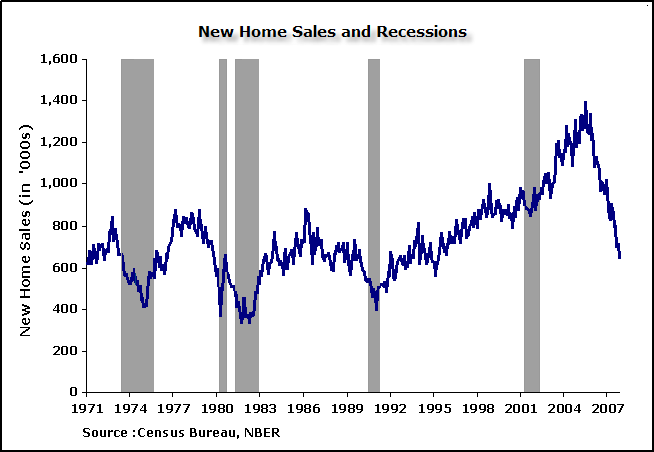
Below is a sample of some of the graphics related to US home prices via Seeking Alpha, in no particular order:


Related:
For more information about housing price changes and finance topics, do a search on the Seeking Alpha website. Also check out Seeking Alpha's Breaking News page, for "real time commentary on the market, with links to key sources".
Seeking Alpha is the child of David Jackson, a former tech research analyst for Morgan Stanley. I plan on spending some time exploring the site. The nice thing about this site is that the articles are arranged a tagged so it is easy to find the information you need. The articles often contain lots of links, so you don't have to waste too much time digging deeper into topics of interest.
Below is a sample of some of the graphics related to US home prices via Seeking Alpha, in no particular order:




Saturday, October 25, 2008
Massive Declines All Around the World; Wall Street Journal Video - Analysis of World
Is it impossible for experts to model the current state of the world economy?
For a few insights about the current global economic situation, take a look at the video analysis with Andy Jordan and Tom Lauricella from the Wall Street Journal below.
Are there glimmers of hope in this massive decline of global markets? How can we really know?
Market Mush
Related
WSJ Interactive Graphic of 10/24/08 Market Dynamics:
Tough Session: Stock declines started in Asia and quickly spread as markets opened for trading around the world
WSJ Article -10/25/08:
Fresh Tumult as Signs of Recession go Global
(Kelly Evans, Joellen Perry,Yumiko Ono and John Lyons)
"In rich countries and poor countries alike, markets are plunging, companies are scrambling for credit and cutting their growth plans and consumers are keeping cash in their pockets. The U.S. and some governments in Europe and Asia are spending heavily to stanch the problems in markets and Main Streets globally, but the attempts have not halted the damage."
For a few insights about the current global economic situation, take a look at the video analysis with Andy Jordan and Tom Lauricella from the Wall Street Journal below.
Are there glimmers of hope in this massive decline of global markets? How can we really know?
Market Mush
Related
WSJ Interactive Graphic of 10/24/08 Market Dynamics:
Tough Session: Stock declines started in Asia and quickly spread as markets opened for trading around the world
WSJ Article -10/25/08:
Fresh Tumult as Signs of Recession go Global
(Kelly Evans, Joellen Perry,Yumiko Ono and John Lyons)
"In rich countries and poor countries alike, markets are plunging, companies are scrambling for credit and cutting their growth plans and consumers are keeping cash in their pockets. The U.S. and some governments in Europe and Asia are spending heavily to stanch the problems in markets and Main Streets globally, but the attempts have not halted the damage."
Sunday, October 19, 2008
Economic Sounds and Sights as Interactive Timeline in Dipity

The new Dipity organizes updates from sites like YouTube, WordPress, Twitter, and 7500 news sites into “channels” on our interactive timeline.
Dipity is the best place to go to catch up on your online world.
You can create your personal channel to broadcast updates to your friends, and can start a channel about anything from Darfur to Dave Mathews in just a few seconds. Start a channel is super-simple fast new options:
* Web Search: Enter a keyword and we’ll scour the web for the most popular content
* Feeds: Drop in an RSS feed and we’ll take it from there.
* Fresh: Start fresh and update with links, video, images and more."
Interactive economic timelines in Dippity
I'm still searching for examples of interactive timelines related to economics, finance, economic history, and the current economic crisis. I visited the Dipity website, and found a few interesting timelines:
An Interactive Timeline of the Current Economic Crisis, from Dipity
The Financial Crisis: A shocking series of events that forever changed the financial markets, as reported by Fortune magazine. (Created on Dippity by cwood)
Note: Contents in the Dipity format can be viewed as an interactive timeline, a flipbook, a list, or a map.
FelixLowe
Here is a static timeline:
Timeline of Economic Turmoil Virgin Media, September 30, 2008
An Interactive Timeline of the Current Economic Crisis, from Dipity
The Financial Crisis: A shocking series of events that forever changed the financial markets, as reported by Fortune magazine. (Created on Dippity by cwood)
Note: Contents in the Dipity format can be viewed as an interactive timeline, a flipbook, a list, or a map.
FelixLowe
Here is a static timeline:
Timeline of Economic Turmoil Virgin Media, September 30, 2008
"The Last God of Central Bank Still Standing": Paul Volcker on Charlie Rose
Ryan Lanham shared the following link, along with his comment, "Fascinating, long form discussion between Charlie Rose and Paul Volcker. Yet another example of using television to elucidate ideas, rather than yelling and bumper sticker foolishness."
Paul Volker on Charlie Rose, via Big Picture
October 9, 2008
http://www.charlierose.com/guests/paul-volcker
The comments section on the Charlie Rose website is worth reading.
Related:
I found this link to the Political Irony blog:
US Electoral Maps before and after Great Depression
Original source: 270toWin:
"270towin.com is an interactive Electoral College map for 2008 and a history of Presidential elections in the United States. Since electoral votes are generally allocated on an "all or none" basis by state, the election of a U.S President is about winning the popular vote in enough states to achieve 270 electoral votes, a majority of the 538 that are available. It is not about getting the most overall popular votes, as we saw in the 2000 election, when the electoral vote winner (Bush) and the popular vote winner (Gore) were different."
FYI: I'd like to gather more information about hedge funds for an upcoming post. Here is some additional food for thought, via Ryan Lanham:
"I fear the hedge fund unwind is even more dangerous, less transparent, and more immediate of a crisis for the markets than real estate."
Paul Volker on Charlie Rose, via Big Picture
October 9, 2008
http://www.charlierose.com/guests/paul-volcker
The comments section on the Charlie Rose website is worth reading.
Related:
I found this link to the Political Irony blog:
US Electoral Maps before and after Great Depression
Original source: 270toWin:
"270towin.com is an interactive Electoral College map for 2008 and a history of Presidential elections in the United States. Since electoral votes are generally allocated on an "all or none" basis by state, the election of a U.S President is about winning the popular vote in enough states to achieve 270 electoral votes, a majority of the 538 that are available. It is not about getting the most overall popular votes, as we saw in the 2000 election, when the electoral vote winner (Bush) and the popular vote winner (Gore) were different."
FYI: I'd like to gather more information about hedge funds for an upcoming post. Here is some additional food for thought, via Ryan Lanham:
"I fear the hedge fund unwind is even more dangerous, less transparent, and more immediate of a crisis for the markets than real estate."
Tuesday, October 14, 2008
Ten Songs from Tough Economic Times, Ten Songs about the Economy, Demand, Supply Rap, and Economic Songs for Kids
The market went up on Monday, the U.S. government's latest economic strategies were debated, the market was so-so on Tuesday, and I am still struggling to figure things out. I don't have any profound insights to share at the moment....
In the meantime, here are links to some "Economic Sounds"....
Ten Songs from Tough Economic Times - Ken Oliver's post on the Music Matters blog
"Demand, Supply" Rap, by Rhythm, Rhyme, Results
Top 10 Songs about the Economy - by Wade Tatangelo, of Tampa Calling, Creative Loafing
Economic Songs (For Kids)
The following songs are from the KidsEcon website. The links are to lyrics set to the tune of popular songs, such as "If you are happy and you know it, clap your hands".
I especially liked these songs, in light of our current circumstances, both set to "The Farmer in the Dell":
The Handy Dandy Guide Helps Me Decide!
The Supply and Demand Song
In the meantime, here are links to some "Economic Sounds"....
Ten Songs from Tough Economic Times - Ken Oliver's post on the Music Matters blog
"Demand, Supply" Rap, by Rhythm, Rhyme, Results
Top 10 Songs about the Economy - by Wade Tatangelo, of Tampa Calling, Creative Loafing
Economic Songs (For Kids)
The following songs are from the KidsEcon website. The links are to lyrics set to the tune of popular songs, such as "If you are happy and you know it, clap your hands".
I especially liked these songs, in light of our current circumstances, both set to "The Farmer in the Dell":
The Handy Dandy Guide Helps Me Decide!
The Supply and Demand Song
Monday, October 13, 2008
Wall Street Journal and New York Times Online: Treasure Troves for Economic and Financial Info
The on-line versions of the Wall Street Journal and the New York Times are great resources for information, current and historical, about economics and finance. In addition to what you find in the print, you will find a variety of interactive charts, photos, and video clips.
Here are few interesting links:
(Note: Some videos may contain ads.)
Wall Street Journal
Wall Street Journal's Interactive Graphics (This site contains interactive graphics about business, the economy, finance, politics, and more.)
Kashkari Gives 'Comprehensive Update' on Rescue Plan (full text from Interim Assistant Secretary for Finance)
Tumbling Stocks, Plunging Currencies (Interactive map depicting information about the major stock index and currency of various countries over the past three months.)
Bears That Won't Go Away (Chart)
What History Tells Us About the Market (10/11/08 -Article with photos)
IMF Pledges Support, but Is Short on Details (10/12/08 - Video; Analysis by WSJ Reporter Bob Davis)
New York Times
Podcast: Weekend Business (10/10/08)
Kashkari Details Rescue Plan (10/13/2008) (CNBC Video, linked from NYT online)
Echoes of a Dismal Past (Video)
How This Bear Market Compares (interactive chart, depicts losses and in length, over the past 80 years)
Credit Crisis Indicators ( interactive chart, depicts 3-Month Treasury, Libor, Ted, Paper, & Bonds)
Here are few interesting links:
(Note: Some videos may contain ads.)
Wall Street Journal
Wall Street Journal's Interactive Graphics (This site contains interactive graphics about business, the economy, finance, politics, and more.)
Kashkari Gives 'Comprehensive Update' on Rescue Plan (full text from Interim Assistant Secretary for Finance)
Tumbling Stocks, Plunging Currencies (Interactive map depicting information about the major stock index and currency of various countries over the past three months.)
Bears That Won't Go Away (Chart)
What History Tells Us About the Market (10/11/08 -Article with photos)
IMF Pledges Support, but Is Short on Details (10/12/08 - Video; Analysis by WSJ Reporter Bob Davis)
New York Times
Podcast: Weekend Business (10/10/08)
Kashkari Details Rescue Plan (10/13/2008) (CNBC Video, linked from NYT online)
Echoes of a Dismal Past (Video)
How This Bear Market Compares (interactive chart, depicts losses and in length, over the past 80 years)
Credit Crisis Indicators ( interactive chart, depicts 3-Month Treasury, Libor, Ted, Paper, & Bonds)
Subscribe to:
Posts (Atom)

